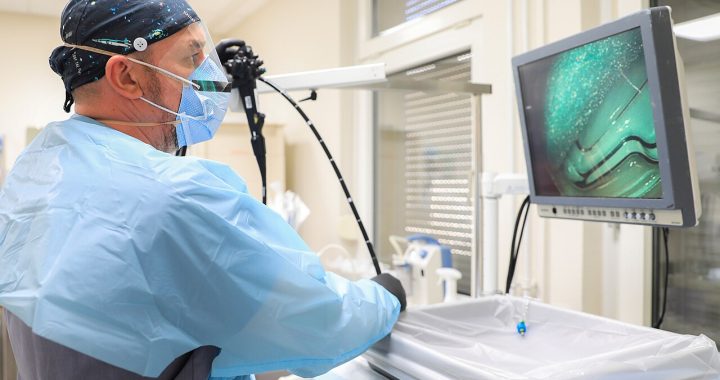
Colorectal cancer screening now starts at 45 for people at average risk. The best test is the one you’ll actually complete, and there’s more than one good option.
Colorectal cancer is one of the most preventable cancers, because screening can find and remove precancerous polyps before they ever turn into cancer. In 2021 the U.S. Preventive Services Task Force lowered the starting age from 50 to 45 for people at average risk.
Who should be screened
- Ages 45 to 75: screening is recommended.
- Ages 76 to 85: an individual decision, based on your health and past screening.
- Over 85: screening generally isn’t recommended.
These ages apply to people at average risk. If a parent, sibling or child has had colorectal cancer or advanced polyps, or you have inflammatory bowel disease or a known inherited syndrome, ask about starting earlier.
Comparing the options
| Test | How often | What it involves |
|---|---|---|
| Colonoscopy | Every 10 years | Bowel prep, sedation and someone to drive you home; polyps removed during the test |
| FIT (fecal immunochemical test) | Every year | A stool sample collected at home and mailed to a lab |
| Stool DNA-FIT | Every 1 to 3 years | A home stool kit that looks for DNA changes and blood |
| CT colonography | Every 5 years | An imaging scan with bowel prep; no sedation |
| Flexible sigmoidoscopy | Every 5 years, or every 10 with a yearly FIT | Examines the lower part of the colon |
After a positive stool test
A positive FIT or stool DNA test isn’t a diagnosis, but it does mean you need a colonoscopy, and soon. Screening isn’t complete until that follow-up is done. Federal guidance issued in 2022 says most private plans must cover the follow-up colonoscopy as part of screening, without cost sharing.
Important
Don’t skip the follow-up colonoscopy after a positive stool test. Delaying it increases the chance that a cancer is found at a later stage.
Getting it done
- Ask your clinician which tests they offer, and how results are followed up.
- Check your plan’s coverage, including the prep, sedation and any polyp removal.
- For colonoscopy, follow the prep instructions exactly; a poor prep can mean repeating the test.
- Put the next screening date on your calendar.
Colorectal screening sits alongside other cancer screenings; see our guides to breast cancer screening and lung cancer screening.
Key points
- The Task Force recommends colorectal cancer screening for adults 45 to 75; for 76 to 85, it’s an individual decision.
- Options include colonoscopy every 10 years, a yearly stool FIT test, a stool DNA-FIT test every one to three years, and CT colonography or flexible sigmoidoscopy every five years.
- A positive stool test needs a follow-up colonoscopy to complete screening; federal guidance says most private plans must cover it without cost sharing.
- A family history, inflammatory bowel disease or certain inherited syndromes may mean starting earlier or testing more often.
Common questions
Is a stool test as good as a colonoscopy?
Both are recommended options. Colonoscopy examines the whole colon and can remove polyps during the procedure; stool tests are done at home but must be repeated more often and need a colonoscopy if positive.
Which symptoms shouldn’t wait for screening?
Rectal bleeding, a lasting change in bowel habits, unexplained weight loss or ongoing abdominal pain should be checked by a clinician at any age.
Does Medicare cover screening?
Medicare Part B covers several colorectal cancer screening tests, including follow-up colonoscopy after a positive stool test. Check Medicare.gov for the current rules and any costs.
This guide explains general U.S. screening recommendations and is not medical advice. Your clinician may recommend a different schedule based on your health, history and test results.